What is Dry Needling or IMS?
Dry Needling or IMS (intra muscular stimulation) is the technique of inserting a thin solid needle into “dysfunctional tissue” or trigger points.
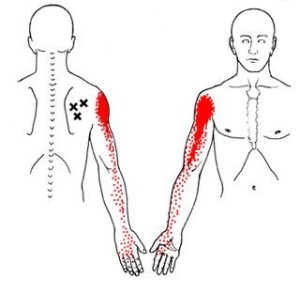
A trigger point is a local contracture or tight band in a muscle fiber that can disrupt function, restrict range of motion, refer pain or cause local tenderness. When dry needling is applied to a dysfunctional muscle or trigger point, it can decrease banding or tightness, increase blood flow, and reduce local and referred pain.
It’s important to note dry needling is not the same as acupuncture. It uses similar tools, but that’s where the similarities end. Dry needling is performed by different practitioners with different training. Acupuncture is based on Eastern medicine, while dry needling is rooted in Western medicine and evaluation of pain patterns, posture, movement impairments, function and orthopedic tests.
Dry needling treats muscle tissue, and its goal is to reduce pain, inactivate trigger points and restore function. It rarely is a standalone procedure. Rather, it is used in conjunction with other physiotherapy modalities and techniques to gain range of motion and mobility and restore function.
How does the needling work? Dry Needling has a mechanical and chemical effect. An accurately placed needle provides a localized stretch to the contracted cytoskeletal structures. A local twitch response may result in an alteration to muscle fibre length as well as have an inhibitory effect on antagonistic muscles.
Dry Needling promotes healing by producing an inflammatory process. Studies by Shah and colleagues (2001) demonstrated that increased levels of chemicals such as bradykinin, Substance P are corrected by eliciting a local twitch response with a needle.
